
























Overview
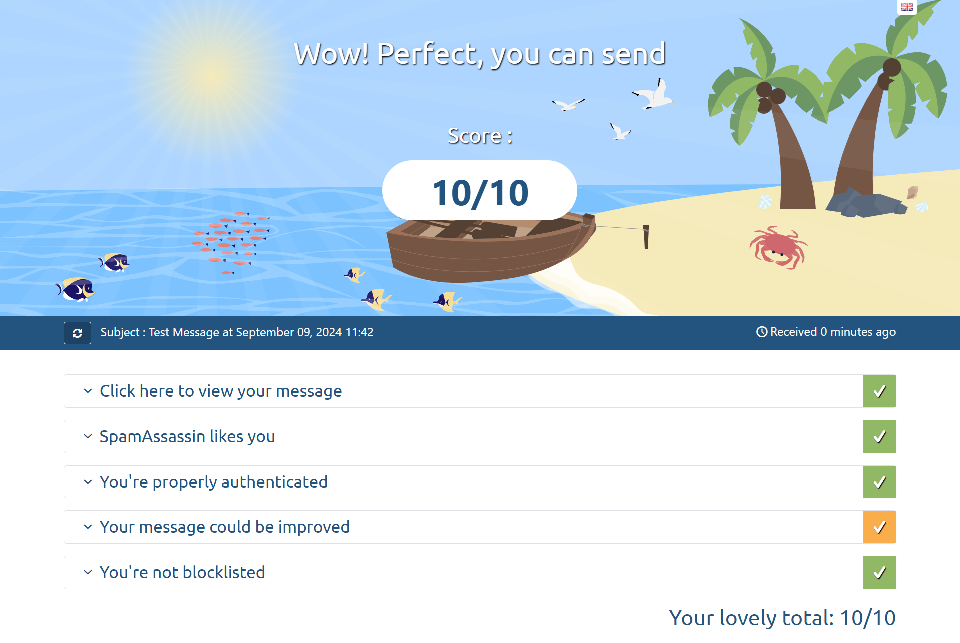
KingSMTP is an independent, bootstrapped transactional email relay that has operated since 2017. Positioned as the privacy-respecting alternative to Mailgun, Mandrill, and Amazon SES, it provides SMTP and HTTP API access for sending, receiving, and routing emails without mandatory identity verification. The service runs on Postal, an open-source mail server, and maintains a claimed 99% inbox delivery rate with a 10/10 Mail-Tester score. Plans range from a $49/year Starter tier (5,000 emails/month) through custom enterprise volumes, with monthly and annual billing options. Setup is advertised as under two minutes, and a 7-day free trial requires no credit card.
The operation is explicitly sole-trader, self-funded, and investor-free, a rarity in email infrastructure. Support channels are direct: email and Telegram, with no ticket-queue bureaucracy. For privacy-conscious developers and small businesses seeking to decouple transactional email from banking systems and identity databases, KingSMTP presents a deliberately niche proposition.
Privacy & KYC
KingSMTP sits at KYC Tier L1, Anonymous (Pseudonymous). Registration demands only an email address and captures the IP at signup. No name, physical address, phone number, or government ID is required. This is genuine no-KYC access, not merely 'light KYC' or delayed verification.
However, the privacy picture contains significant friction. The service logs sender and recipient addresses, delivery timestamps, status codes, and the connecting client's IP. While KingSMTP states email logs are purged after 24 hours and offers zero-log retention on request, the default logging of envelope data and IPs is extensive for a 'privacy-first' provider. The privacy score of 0/100 in our directory reflects this disconnect: pseudonymous signup does not compensate for granular connection and delivery logging that many anonymous users would find unacceptable. The privacy policy also discloses use of Clicky analytics (not Google Analytics) for website visitors, and hosting on cloud infrastructure in India, a jurisdiction without strong data-protection guarantees.
- No identity verification required at any tier
- Email and IP logged at registration; connection IPs and envelope data logged during relay
- 24-hour default log retention, configurable to minimal/zero on request
- Crypto-only payments prevent banking data leakage
- Tor access available for signup and management
Supported assets & payments
KingSMTP accepts Bitcoin (BTC), Tether (USDT), Monero (XMR), and unspecified 'other cryptocurrencies' by arrangement. Fiat is not accepted directly, eliminating chargeback risk and banking surveillance from the transaction flow. This crypto-only approach aligns with the service's no-KYC positioning: no credit card numbers, no bank accounts, no payment processor identity checks. Cryptocurrency transaction IDs are retained for accounting, but the payment trail stops at the blockchain, there is no KYC bridge to traditional finance.
Pricing is transparent and flat-rate rather than usage-capped with punitive overages. The entry point is $49/year for 5,000 emails/month on a single domain. The popular Business plan runs $9.99/month or $79/year for 10,000 emails across 10 domains. Growth tier hits $19.99/month or $159/year for 20,000 emails and 30 domains. High-volume senders (50,000–100,000+ emails) can scale to $99/month or negotiate custom pricing. All plans include identical features, no artificial gating of APIs, analytics, or routing capabilities.
Security & custody
KingSMTP operates as a custodial, hosted service. You do not control the mail server infrastructure; KingSMTP hosts it on cloud servers in India. This is standard for SMTP relays but worth stating clearly: your email metadata transits and temporarily resides on their systems. TLS encryption is applied to connections, and DKIM/SPF authentication is included, but the service is not end-to-end encrypted between you and your recipients.
The open-source Postal foundation provides transparency into the delivery stack, though this does not equate to audited infrastructure or open-source client dashboards. The trust score of 4/100 reflects the concentrated risk of a sole-operator business with no external accountability, no published security audits, and hosting in a non-privacy jurisdiction. Uptime claims are strong, 99.99% with no incidents in the 30 days preceding review, but these are self-reported metrics without independent verification.
Notably, KingSMTP does not scan email content for advertising or 'improving services,' a practice common among major providers. The threat model here is metadata exposure and operator compromise, not content mining.
Who it's for, verdict
KingSMTP serves a specific user: developers, small SaaS operators, and privacy advocates who need reliable transactional email without embedding their identity into yet another SaaS database. If your priority is no-KYC signup, crypto payment, and direct human support, KingSMTP delivers where Mailgun and Amazon SES impose identity verification and banking surveillance. The Tor availability and Monero acceptance are genuine differentiators for anonymity-maximizing users.
Yet the service is not for the paranoid. Default IP and envelope logging, India-based hosting, and sole-trader governance create single points of failure that sophisticated threat models cannot ignore. The 0/100 privacy score and 4/100 trust score are harsh but warranted: pseudonymity at the front door does not erase metadata retention inside the house.
Our 7/10 overall score recognizes a functional, long-running, honestly marketed service that fills a real gap. For low-stakes transactional email, notifications, password resets, newsletters, KingSMTP is a pragmatic no-KYC choice. For whistleblowers, journalists, or anyone requiring robust metadata protection, the logging defaults and jurisdiction demand caution or self-hosting instead.